Central Asia · The Silk Road
Uzbekistan
The cradle of Central Asia: its history, its Silk Road cities, its flag and its emblem.
Central Asia
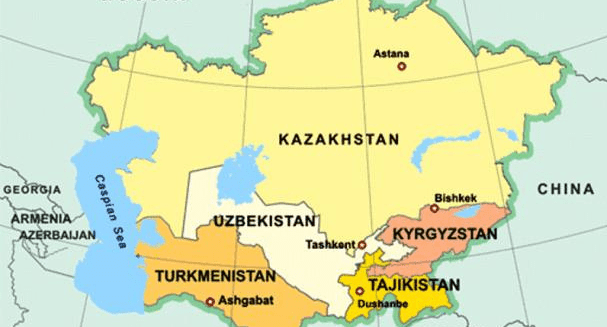
Central Asia is made up of five countries sharing borders and a complex history: Kazakhstan, Uzbekistan, Turkmenistan, Kyrgyzstan and Tajikistan.
| Country | In short |
|---|---|
| Kazakhstan | The largest: vast steppes, abundant resources |
| Uzbekistan | Cradle of the ancient Silk Road |
| Turkmenistan | Rich in natural gas, home to the Karakum desert |
| Kyrgyzstan | Majestic mountains, a paradise for nature lovers |
| Tajikistan | Towering peaks; the smallest country in the region |
Uzbekistan, a cultural jewel
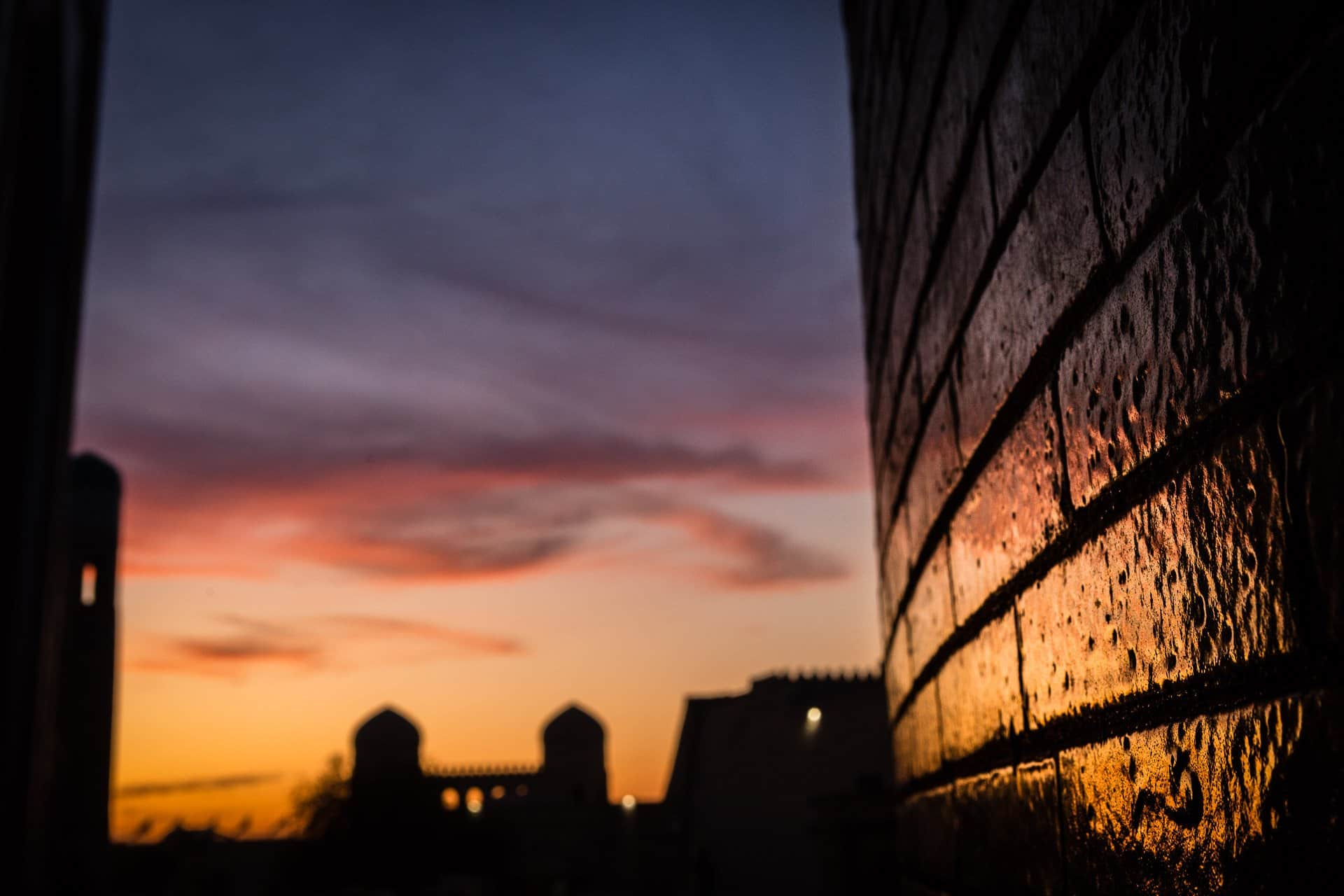
At the heart of Uzbekistan lie the remains of the ancient Silk Road, a reminder of its role in trade and cultural exchange over the centuries. Its historic cities, Samarkand, Bukhara and Khiva, amaze visitors with their architecture, lively bazaars and age-old traditions. Deserts, mountains and oases, the warmth of its people, its crafts and its cuisine complete the experience.
The national flag
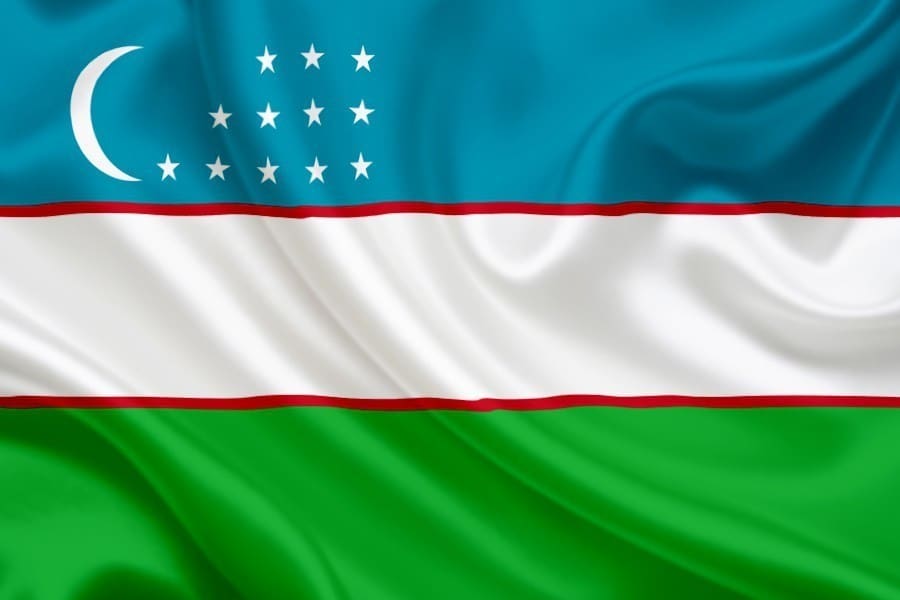
The flag has three horizontal bands, blue, white and green, separated by two thin red stripes. The blue band carries a white crescent moon and twelve white stars. It was adopted on 18 November 1991, shortly after independence. The crescent stands for independence; the twelve stars for the twelve months of the year and the values of the nation.
The national emblem
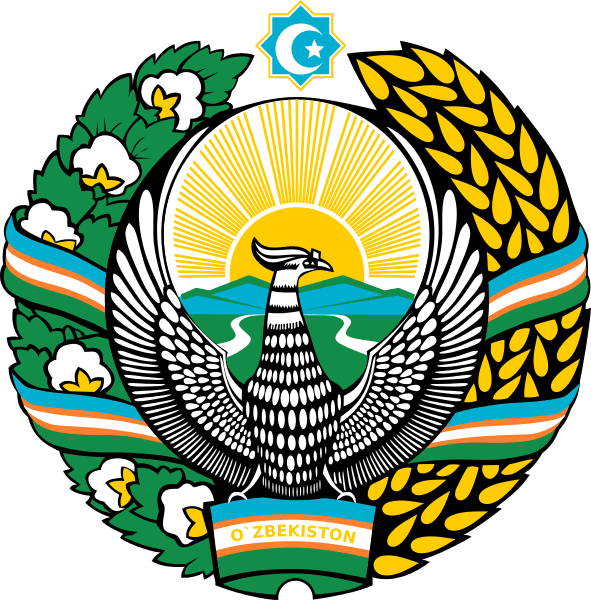
The emblem shows a rising sun over mountains, rivers and a flourishing valley, framed by a wreath of wheat ears and cotton branches. At the top, an octagon holds a crescent and star. In the centre, the Khumo bird (a kind of phoenix) spreads its wings, a symbol of happiness and love of freedom. The ribbon at the bottom reads “O’zbekiston”.
Uzbekistan in four monuments
The Kalon minaret, Bukhara (1127)
Built in 1127 by the Karakhanid ruler Arslan Khan, it called the faithful to prayer and served as a watchtower. A century later Genghis Khan, who razed Bukhara, ordered it spared. 45.6 m high, 9 m wide at the base.
The walls of Khiva (17th c.)
Itchan Kala, the inner town of Khiva, is enclosed by a mud-brick wall with four gates: Ata, Polvon, Tash and Bagcha. In 1990 it became the first site in Uzbekistan on the UNESCO World Heritage list.
The domes of Samarkand (14th–15th c.)
The ribbed dome is the signature of Timurid architecture, covered in a ceramic mosaic of cobalt blue, white and ochre on a turquoise ground, which earned Samarkand its name of the blue city.
Shah-i-Zinda, the necropolis of Samarkand (11th–19th c.)
Shah-i-Zinda, “the living king”, is named after Kusam ibn Abbas, cousin of the Prophet, who came to Samarkand in the 7th century. The avenue grew over eight centuries and gathers more than twenty buildings, including the mausoleums of Tamerlane’s relatives.
Updated on 23 November 2026